

Three glasses designs: audio, MC6350, and QM102V
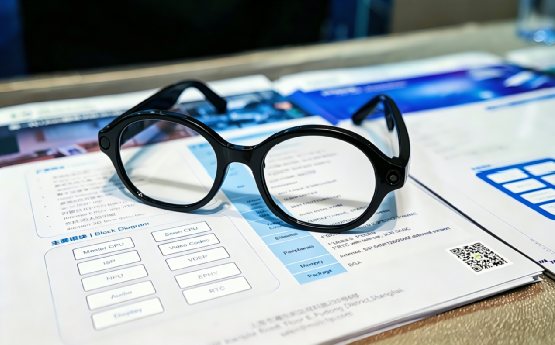
Three glasses designs, made with Bestechnic. The housing and the brand are yours. A customer can take a custom design, or take only the chip and the design.
Audio
The post calls this tier 2800HP. The controller is a Bestechnic BES2800YH, for audio glasses under 1,000 yuan, and also for a wearable accessory or a voice clip.
Bluetooth 5.4, both modes. It has HIFI4, active noise cancelling, echo cancelling, and a wake word. Sleep current is down at microamps. The audio path and the radio are already in volume production.
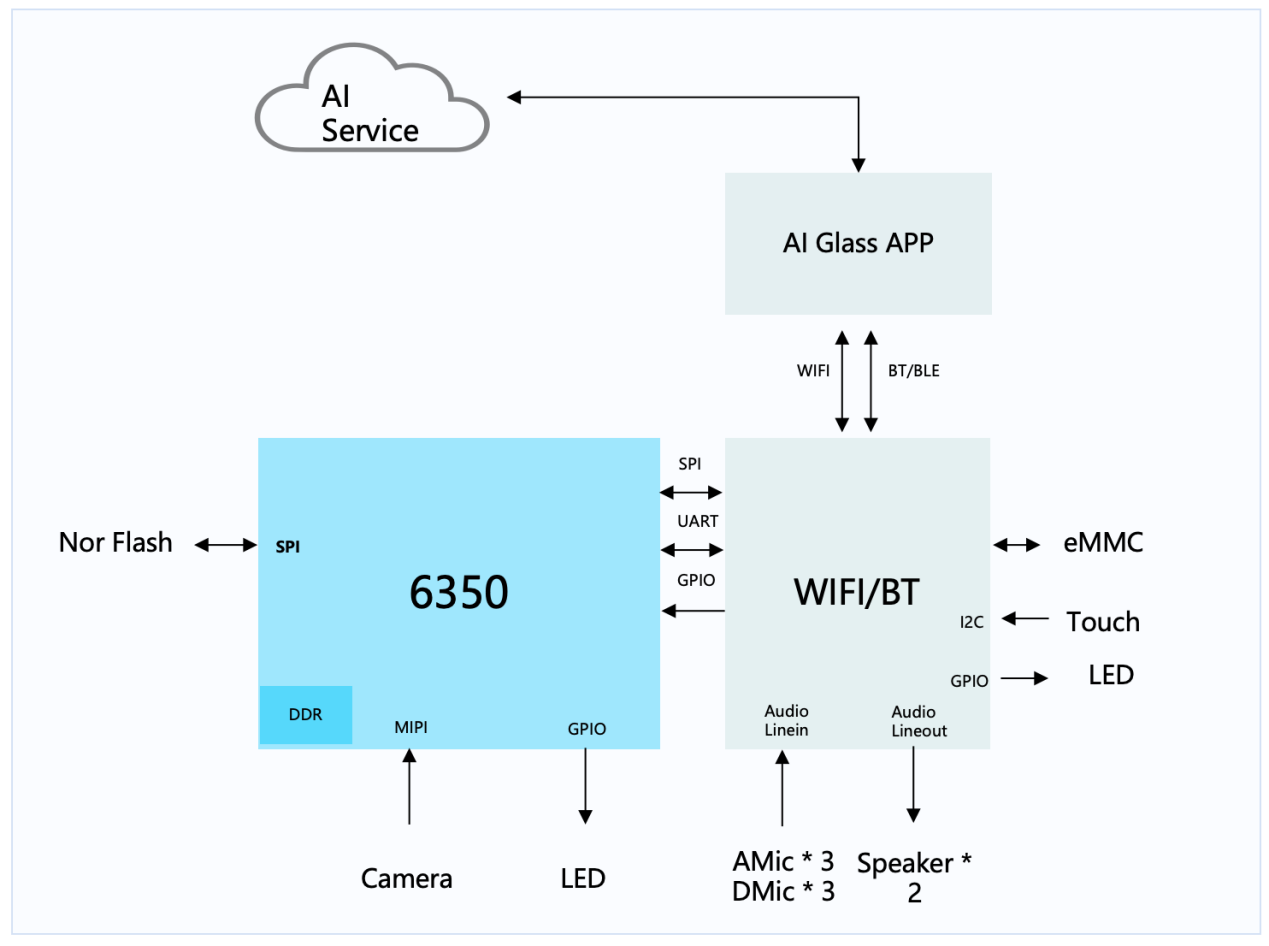
Imaging, on MC6350
This tier is 2800BP. The controller is a BES2800BP, and the image chip is MC6350, on 6 nm and 12 nm. Compute is 1 TOPS, with 256 MB of DDR3L.
Photos go up to 12 megapixels. Video is 4 megapixels at 30 frames, with low-light denoise, multi-frame combination, and offline electronic stabilization. Recording 2 megapixels at 30 frames draws 213 milliwatts.
It is for camera glasses, glasses that talk, and commercial glasses used on an inspection or an enforcement round.
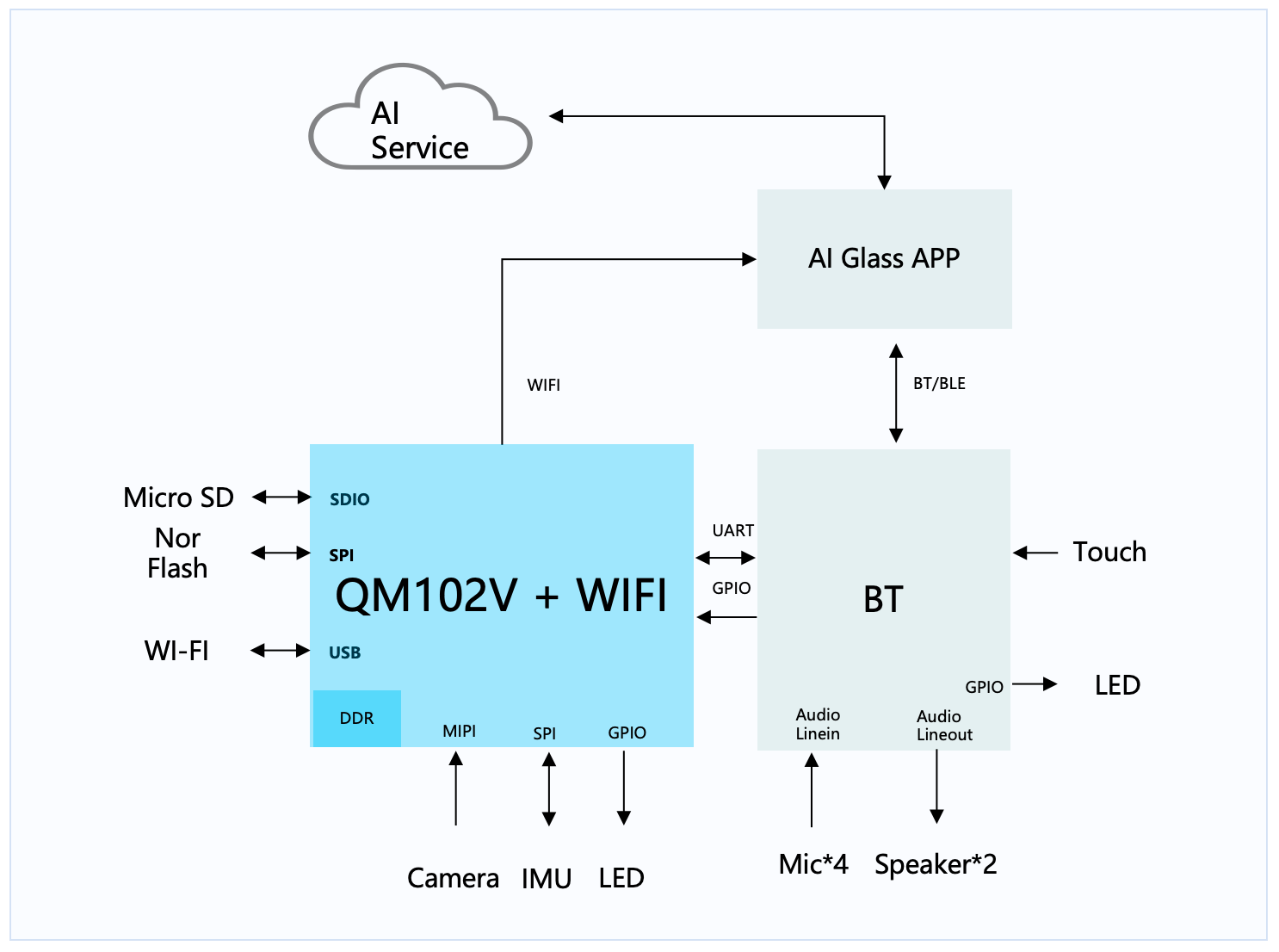
QM102V
This tier is 2800YH. The controller is still a BES2800YH, and the image chip is a QM102V. Compute is 0.5 TOPS, with 64 MB of LPDDR2.
Photos are 8 megapixels, and it can record a short video. It has basic stabilization, denoise, and a lighter recognition pass, and it supports AOV.
It is for camera glasses from 100 to 1,000 yuan, and for an entry product a student or an older person would wear.
Next to two other designs
This is the comparison in the 30 April 2026 post.
| QuaMing, 2800 plus an image chip | Qualcomm AR1 | Unisoc W517 | |
|---|---|---|---|
| Architecture | A controller plus a dedicated image chip | One high-end chip. Strong, and costly | One quad-core chip |
| Power | Sleep in the microamps. Recording and live view stay bounded | High power, and it needs cooling | In the middle, for a lighter product |
| Image | Low-light denoise and electronic stabilization | A strong image, at a high price | Two image processors, enough for ordinary capture |
| Cost | Low to middle | High | Middle |
| Volume | It can be changed, and the cycle is short | A long cycle | Mature, for products that ship in quantity |
In that post, the bill of materials is about one third to one half of a Qualcomm AR1 design. Power is lower than Unisoc W517, and the design is easier to change.
Where customers were
At the time of the post, a domestic wearable brand was preparing to put a mid-range and higher imaging design into volume. Several consumer brands had finished validation, and the QM102V tier was close to volume too. Inspection and security samples had been handed to customers to try. Light waveguide, outdoor, education, elder care, and glasses for the blind were still in development.
For a specification or a reference design, write to qmpublic@quaming.com. The wearables page is Wearables.
Original post: Three glasses designs